Lorem ipsum dolor sit amet, consectetur adipiscing elit. Proin vulputate vel enim vel bibendum. Nunc ornare mi in odio consectetur, et molestie nisl venenatis.
Apert Syndrome
Conditions sub-title goes here.
Conditions sub-title goes here.

Lorem ipsum dolor sit amet, consectetur adipiscing elit. Proin vulputate vel enim vel bibendum. Nunc ornare mi in odio consectetur, et molestie nisl venenatis.


Apert syndrome, also known as acrocephalosyndactyly, is a genetic disorder that causes fusion of the skull, hands, and feet bones. It is characterized by deformities of the skull, face, teeth, and limbs. Apert syndrome occurs in one out of every 65,000 to 88,000 births.
Boston Children’s plastic surgeon Dr. Brian Labow discusses what causes Apert syndrome.
Boston Children’s plastic surgeon Dr. Brian Labow discusses what causes Apert syndrome.
Boston Children’s plastic surgeon Dr. Brian Labow discusses what causes Apert syndrome.
Children with Apert syndrome typically experience syndactyly — a condition in which their fingers are webbed or conjoined. With Apert syndrome, the severity of syndactyly means your child’s fingers might not bend completely even after being separated, and their thumbs may be short and unable to bend well.
There are three main types of syndactyly in Apert syndrome:
Image
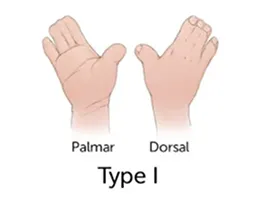
Type I | Image

Type II | Image

Type III |
|
|
We don’t know the exact cause of Apert syndrome, but many experts believe it may be the result of a mutation in a gene called "fibroblast growth factor receptor 2," or FGFR2. The mutation occurs early in a pregnancy.
Because FGFR2 plays an important role in bone growth, disruption of it may cause certain traits of Apert syndrome, including:
The FGFR2 gene is also involved in similar craniofacial syndromes, including Crouzon syndrome, Pfeiffer syndrome, and Jackson-Weiss.
Apert syndrome can be inherited, or it may occur without a known family history. If one parent has Apert syndrome, there is a 50 percent chance that their child will be born with the disorder.
Members of the Department of Plastic and Oral Surgery at Boston Children's Hospital answer frequently asked questions relative to Apert syndrome.
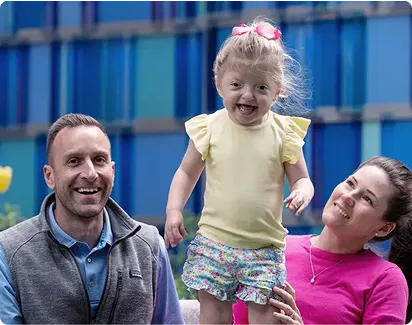
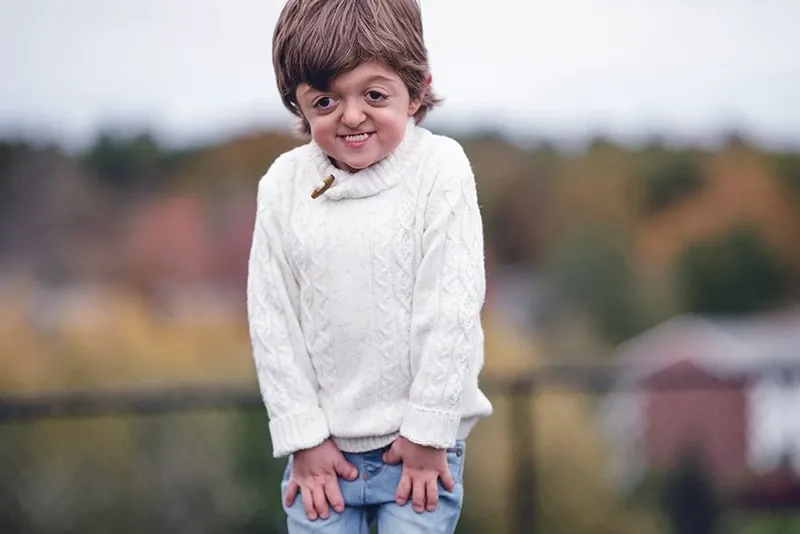
Isabelle's family mantra is "no labels, no limits" and she lives it every single day. From climbing ladders at the playground to threading beads for Isabelle continues to amaze her family and friends.
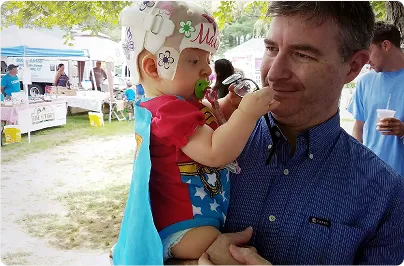
Apert syndrome is usually diagnosed at birth based on physical signs such as a high, prominent forehead, underdeveloped upper jaw, prominent eyes, and fused fingers and/or toes. Fused fingers and toes distinguish Apert syndrome from other craniofacial disorders.
If your doctor suspects Apert syndrome is during your pregnancy, they may request genetic testing to confirm the diagnosis.
At Boston Children’s, babies diagnosed with Apert syndrome are seen by experts from a variety of specialties, including craniofacial surgery, genetics, neurosurgery, and hand and upper extremity surgery.
Our specialists may order several tests, including:
Most often, children with Apert syndrome require multiple operations and procedures. At Boston Children’s, our clinicians have unparalleled expertise in the areas of care your child may need, including:
Learn more about the Craniofacial Program at Boston Children’s Hospital
Join Dr. Mark Proctor, neurosurgeon-in-chief at Boston Children’s, Hospital, as he discusses what you need to know endoscopic strip craniectomy, an innovative approach to treating craniosynostosis, or premature fusion of the skull bones. Hear him explain the procedure, its benefits, and its unique application in treating Apert syndrome.
Learn more about the Craniofacial Program at Boston Children’s Hospital
Children diagnosed with Apert syndrome require a broad range of medical expertise, including:
Image

|
|
|
The Craniofacial Program at Boston Children’s incorporates all of these specialists to care for more than 500 patients every year who have a range of craniofacial diagnoses. We are one of the oldest programs in the world, and our experience and commitment to innovative and compassionate care has established us as an international leader in treating children with Apert syndrome.
At Boston Children’s, we use a collaborative and coordinated approach to care for children with Apert syndrome. This includes:
Image
English | Image
Portuguese | Image
Spanish |
“We want Apert syndrome to be a detail about João, not his whole story. He’s so much more than that.”