Popular Search Terms


Stress
Stress
 The Boston Children’s fit kit offers strategies, tools, and activities on five key topics — nutrition, fitness, sedentary time, sleep, and stress — to help families live healthy, active lives. Learn about the Boston Children’s fit kit or keep reading below to dig into stress.
Like adults, children experience some stress every day. Stress is a state of mental or emotional tension in response to a demanding situation or unpleasant circumstance. Most people think of stress as bad, but some stress is natural and can even be helpful. Small doses of stress — such as the pressure of studying for a test, preparing for a big game, or getting ready to meet somebody you want to impress — can make you more alert, boost your memory, or motivate you to work hard. But stress can harm your health when it lasts for days, weeks, or months.
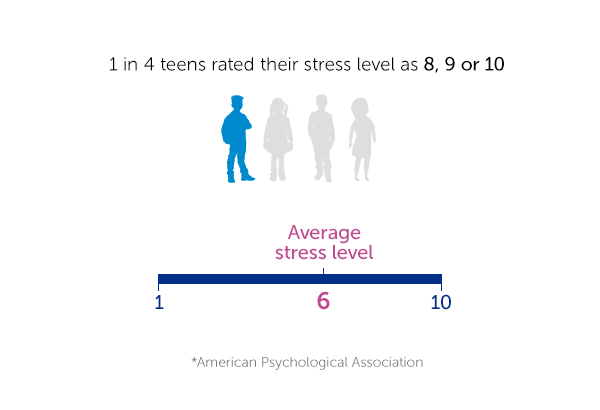
The American Psychological Association conducted a survey asking teens to rate their average levels of stress during the school year on a scale of 1 to 10. They found that teens had an average stress level of almost 6, exceeding healthy levels. More than one out of four teens rated their stress as 8, 9, or 10. When asked to report top sources of stress, 83 percent of participants cited school. Sources of stress at school can include academic challenges, relationship issues, bullying, or other difficulties.
This survey was conducted before the COVID-19 pandemic. During the pandemic, children and teens have been under even more stress than they were before. Changes in school and family routines, isolation at home, stressed parents, and fear of the virus itself have hit kids hard. So, it’s a good idea to learn about stress and ways you can manage it.
If you run into any words or terms here that you don’t know, check out our stress glossary for help.
How does stress affect the body and appetite?
Humans have a built-in system to survive demanding or dangerous situations. When there’s a threat, the fast-acting stress hormone adrenaline is released in your body. Adrenaline increases breathing, heart rate, and blood pressure so your body can handle the situation or escape danger. When the emergency is over, your body returns to normal. This short-term response is beneficial, with no long-term effects. But too much adrenaline, as when you are continually stressed, can have harmful effects on your body and behavior.
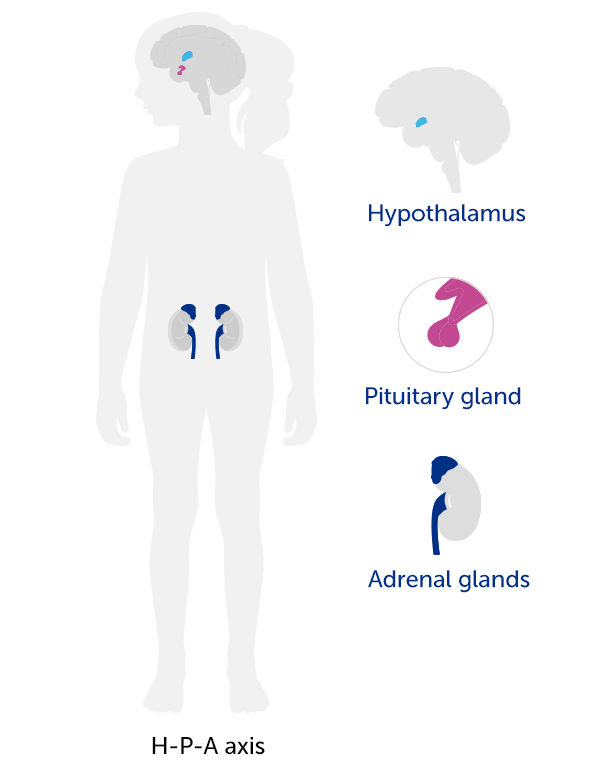 The hypothalamus (an area of the brain), pituitary gland (a gland at the base of the brain that produces hormones), and adrenal glands (hormone-producing glands located in the kidneys) make up what’s called the H-P-A axis. In response to a stressful situation, the hypothalamus sends a message to the pituitary gland, which sends a message to the adrenal glands. The adrenal glands release the stress hormone cortisol. Cortisol helps control blood sugar, regulate blood pressure, and reduce inflammation. In short, it is essential for good health. But when cortisol is too high for too long, it can increase belly fat and interfere with metabolism (the way your body converts calories from food into energy).
The H-P-A axis also regulates moods, emotions, immunity, and eating. That’s why stress can cause mood swings, emotional problems, sickness, and overeating. Some people reach for “comfort foods,” for instance, baked goods, chips, and sweets, when they get stressed. Eating these foods leads to release of “anti-stress chemicals,” such as endorphins. But any relief is temporary, and the health consequences last much longer. Unfortunately, most comfort foods are high-glycemic foods that cause a blood-sugar roller coaster.
How can I tell if my child is stressed?
Stress can manifest in kids in lots of different ways. Warning signs can include:
- worrying
- nervousness, anxiety, or depression
- irritability or anger
- fatigue
- feeling overwhelmed
- inability to concentrate (which can result in declining grades)
- stomachaches or headaches
- muscle tension
- insomnia or difficulty sleeping
- procrastinating or neglecting responsibilities
- eating too much or too little
- negative self-talk
- skipping exercise and sitting around too much (watching television, surfing the Internet, using social media)
- acting out (tantrums for younger kids or risky behaviors for teens, like using drugs or drinking alcohol)
When should my child see a mental health professional?
Seek help from a mental health professional if you notice warning signs of depression or severe anxiety. These include extreme sadness, excessive worrying, negative feelings, loss of interest in normal activities, and declining academic or athletic performance.
How can kids take control of everyday stress?
Different things are stressful for different children. No single strategy for managing stress will work for everybody. It’s important for children to discover what stresses them out and how to manage that stress themselves — with support from caring adults.
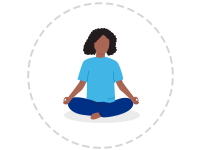
Mindfulness activities and relaxation techniques — in addition to exercising regularly, eating healthy food, limiting sedentary time, and getting enough sleep — can help manage stress.
Mindfulness is broadly defined as purposefully paying attention — moment by moment — to thoughts, feelings, bodily sensations, and the surrounding environment. Higher levels of mindfulness are related to better overall physical health, more physical activity, healthier eating patterns, and better-quality sleep.
Are bullying and stress connected?
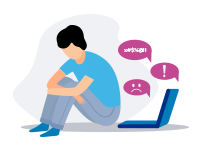 Bullying is a stressor that warrants special attention. Bullying happens in many settings, including schools. As children’s social lives have moved online, cyberbullying has become increasingly common. Text messages or postings on social media that include threats, rumors, and nasty or untrue comments are forms of cyberbullying. Because many children are texting or on social media continuously throughout the day and even into the night, cyberbullying can be more harmful than in-person bullying.
Whether bullying happens in person or online, children may be involved as targets, perpetrators, or bystanders. Children who are targets of bullying are at increased risk for depression, anxiety, sleep disturbances, and difficulties in school. The perpetrators are at increased risk for substance abuse, academic problems, and violent activities. Kids who are both targets and perpetrators are at greatest risk for these health and social problems. Bystanders, kids who witness bullying, are at increased risk for depression, anxiety, and physical symptoms such as headaches, stomachaches, and rashes.
Main messages
Image

Take control of your stress — discover your stress busters
Glossary
Boston Children’s fit kit teaches kids about stress and helps them develop their own strategies to take control. Learn more about managing stress.
What does this word mean?
- Adrenaline: Stress hormone released from the adrenal glands in response to demanding or dangerous situations.
- Bullying: Unwanted, aggressive behavior directed at an individual or group of individuals who hold less power than the perpetrator. The behavior is typically repeated over time.
- Bystander: A child who sees or knows about bullying that is happening to someone else.
- Cortisol: Stress hormone released from the adrenal glands. When cortisol is too high for too long, it can increase belly fat and interfere with metabolism (such as the way your body converts calories from food into energy).
- Cyberbullying: Bullying that takes place using technology (social media, texting).
- Endorphins: Chemicals secreted by the brain and pituitary gland that relieve pain and have a calming effect.
- High-glycemic foods: Foods that cause a rapid increase, followed by a rapid decrease, in blood sugar.
- H-P-A axis: Hormonal interactions among the hypothalamus, pituitary gland, and adrenal glands during a stress response.
- Mindfulness: Purposefully paying attention — moment by moment — to thoughts, feelings, bodily sensations, and the surrounding environment.
- Negative self-talk: Expression of thoughts or feelings that are counter-productive and demotivating.
- Perpetrator: A child who bullies another child.
- Self-image: The mental image one has of oneself, which may be positive or negative.
- Stress buster: Something you can do to relieve stress.
- Stressor: Environmental condition, external stimulus, or event that causes stress.
- Target: A child who is bullied.
- Visualization: Coming up with a mental picture of something peaceful that promotes relaxation.